

Why BOMA BEST Matters — and Where Buildings Commonly Struggle
Key takeaways:
- BOMA BEST certifies how a building is operated, not how it was designed (that's LEED's job).
- It scores buildings on energy, water, indoor air quality (IAQ), and maintenance across five levels: Baseline, Bronze, Silver, Gold, Platinum.
- Certification reflects reported data — not verified system performance. A building can score well on paper while airflows, hydronic balance, or sensors are silently out of spec.
- Most certifications take 3–6 months depending on documentation readiness.
- Costs typically range from a few thousand dollars for a single small building to tens of thousands for a multi-building portfolio pursuing higher levels — driven mostly by staff time, not the application fee itself.
BOMA BEST certification is a building certification program that evaluates how efficiently an existing building is operated and maintained, focusing on energy use, water efficiency, indoor air quality, and day-to-day operational performance. It is designed for existing buildings and reflects how a facility is actually run, not how it was originally designed.
If you're a property manager or chief engineer, this is the question that matters: Does the certification reflect real performance, or just documentation?
What Is BOMA BEST Certification?
BOMA BEST (Building Environmental Standards) is a certification program administered by BOMA (Building Owners and Managers Association) that evaluates the operational performance of commercial buildings across six categories:
- Energy management
- Water efficiency
- Indoor air quality (IAQ)
- Operations and maintenance
- Waste and site management
- Environmental management systems
Buildings are scored and certified at one of five levels: Baseline, Bronze, Silver, Gold, or Platinum.
Why It Matters to Property Managers and Engineers
It forces consistency
BOMA BEST requires structured, documented processes — preventive maintenance programs, equipment tracking, and environmental procedures. This level of consistency reduces operational gaps and surprises.
It brings real data into decision-making
Instead of relying on assumptions, certified buildings track energy trends, water consumption, indoor air conditions, and maintenance activity. This visibility makes issues easier to identify and correct early.
It supports tenant expectations
Tenants increasingly ask technical questions about ventilation, indoor air quality, and building performance. Certification gives property teams a structured, credible way to answer them.
How the BOMA BEST Certification Process Works
- Assessment — Evaluate current building operations and documentation against BOMA BEST criteria.
- Data Collection — Submit energy and water data, maintenance records, and operating procedures.
- Verification — A third party reviews the submission for accuracy.
- Scoring — The building is assigned a certification level based on points earned.
- Recertification — Buildings must re-certify periodically (typically every 1–3 years depending on level) to maintain status.
Key Requirements for BOMA BEST Certification
Most buildings need to demonstrate:
- Energy benchmarking and tracking
- Preventive maintenance programs
- Indoor air quality (IAQ) practices
- Water usage monitoring
- Waste management processes
- Environmental policies
BOMA BEST Certification Levels at a Glance
| Level | What It Reflects | Typical Building Profile |
|---|---|---|
| Baseline | Meets minimum requirements | New to certification, limited data history |
| Bronze / Silver | Improved structure and performance | Established maintenance program, partial data tracking |
| Gold | Strong operational consistency and data tracking | Mature preventive maintenance, consistent benchmarking |
| Platinum | High-performing building, advanced practices | Verified systems, advanced controls, low energy/water intensity |
Where Buildings Struggle
The same issues tend to surface across most buildings going through certification:
Lack of verified system performance
- Airflows never tested after occupancy (this verification process is called Testing, Adjusting, and Balancing — TAB)
- Hydronic systems out of balance
- Sensors drifting out of calibration
Gap between design and actual operation
- Spaces repurposed after initial design
- Schedules changed informally over time
- Manual overrides left in place by previous staff
The building people think they're running is not always the one actually operating.
Preventive maintenance slipping
- Tasks missed or delayed
- Equipment efficiency drops as a result
- Comfort complaints increase
Why Field Verification Still Matters
BOMA BEST evaluates what is documented and reported. It does not independently confirm actual system performance. To understand real conditions, buildings need to validate:
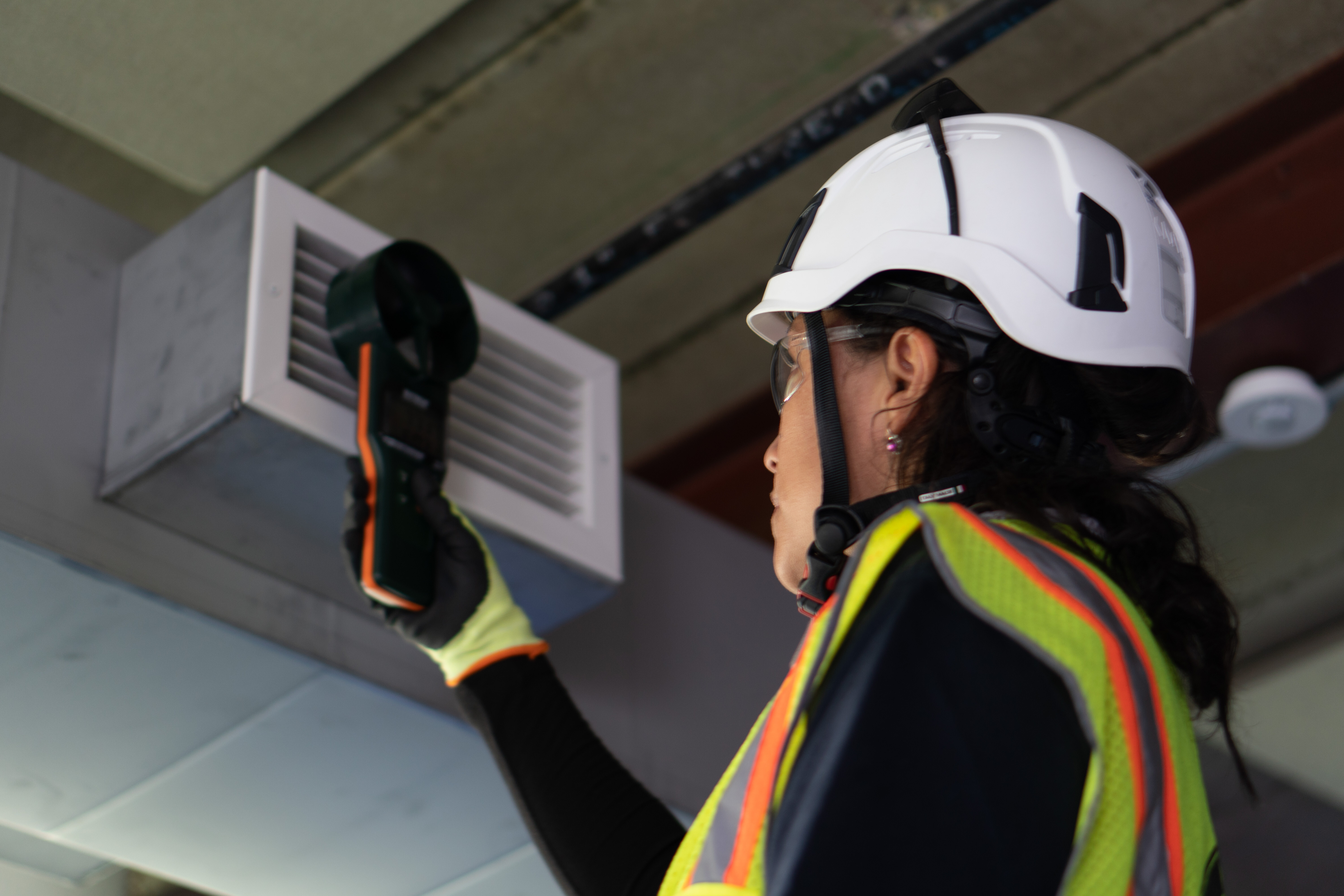
- Air distribution (TAB) — confirming airflow at diffusers and returns matches design intent
- Hydronic balancing — confirming water flow through heating/cooling loops is properly distributed
- Control sequences — confirming the building automation system is executing logic as intended, not overridden
- Sensor accuracy — confirming temperature, humidity, and CO2 sensors are reading true values
Without this validation, it's possible to meet certification requirements while missing underlying operational issues.
BOMA BEST vs. LEED: What's the Difference?
| BOMA BEST | LEED | |
|---|---|---|
| Focus | Ongoing operations and maintenance | Design and construction |
| Best for | Existing buildings already in operation | New construction or major renovation |
| What it measures | Day-to-day performance, documented processes | Design choices, materials, systems specified at build time |
| Recertification | Required periodically to maintain status | Generally not required after initial certification |
| Reflects | How a building is actually run today | How a building was designed to perform |
For existing buildings, BOMA BEST is more reflective of daily operation than LEED.
Is BOMA BEST Certification Worth It?
Yes — if it's used correctly.
Buildings that treat it as a checklist get limited value. Buildings that use it to improve operations, validate systems, and track performance over time tend to see meaningful, measurable results in energy cost and tenant satisfaction.
What Does BOMA BEST Certification Cost?
Costs vary based on building size, portfolio scale, and certification level pursued, but as a general guide:
- Single building, Baseline–Silver: typically a few thousand dollars in direct fees
- Single building, Gold–Platinum: higher, due to more extensive data verification and system improvements needed to qualify
- Multi-building portfolios: costs scale per building, though some efficiencies exist in shared documentation and processes
In most cases, the largest cost isn't the application fee — it's the internal staff time spent organizing data, documentation, and operational records to meet the requirements.
How to Improve Your BOMA BEST Score
Most score improvements come from operational discipline rather than capital spending:
- Strengthening preventive maintenance programs
- Verifying airflow and hydronic distribution (TAB)
- Aligning control sequences with actual building use
- Calibrating sensors
- Reviewing energy data on a regular cadence rather than only at recertification
Frequently Asked Questions
What is BOMA BEST certification?
It is a program that evaluates how efficiently a building is operated, focusing on energy, water, air quality, and maintenance practices.
What are the levels of BOMA BEST certification?
Baseline, Bronze, Silver, Gold, and Platinum.
How do you get BOMA BEST certified?
Complete an assessment, submit operational data, undergo third-party verification, and receive a score based on performance.
What are the requirements for BOMA BEST certification?
Energy tracking, preventive maintenance, indoor air quality practices, water monitoring, and environmental policies.
How long does BOMA BEST certification take?
Typically 3 to 6 months, depending on how organized the building's data and documentation are going into the process.
How much does BOMA BEST certification cost?
Costs vary by building size and certification level, generally ranging from a few thousand dollars for a single building at lower levels to significantly more for larger portfolios or higher levels. Most of the real cost is staff time, not the fee itself.
Does BOMA BEST certification guarantee performance?
No. It reflects reported data. Actual performance depends on system operation and field verification.
Can older buildings reach high certification levels?
Yes. Performance determines certification level, not building age.
What is the biggest challenge with certification?
Incomplete documentation and a lack of verified system performance — buildings often pass on paperwork while underlying systems like airflow balance or sensor calibration remain unverified.
Final Take
BOMA BEST is most useful when treated as an operational framework, not a checklist. When teams use it to validate systems, improve processes, and track performance over time, it becomes a tool for managing buildings — not just certifying them.