
What is testing and balancing in HVAC?
Testing, Adjusting, and Balancing (TAB) is a systematic process used to measure, verify, and fine-tune HVAC systems so they perform exactly as designed.
It involves three core steps:
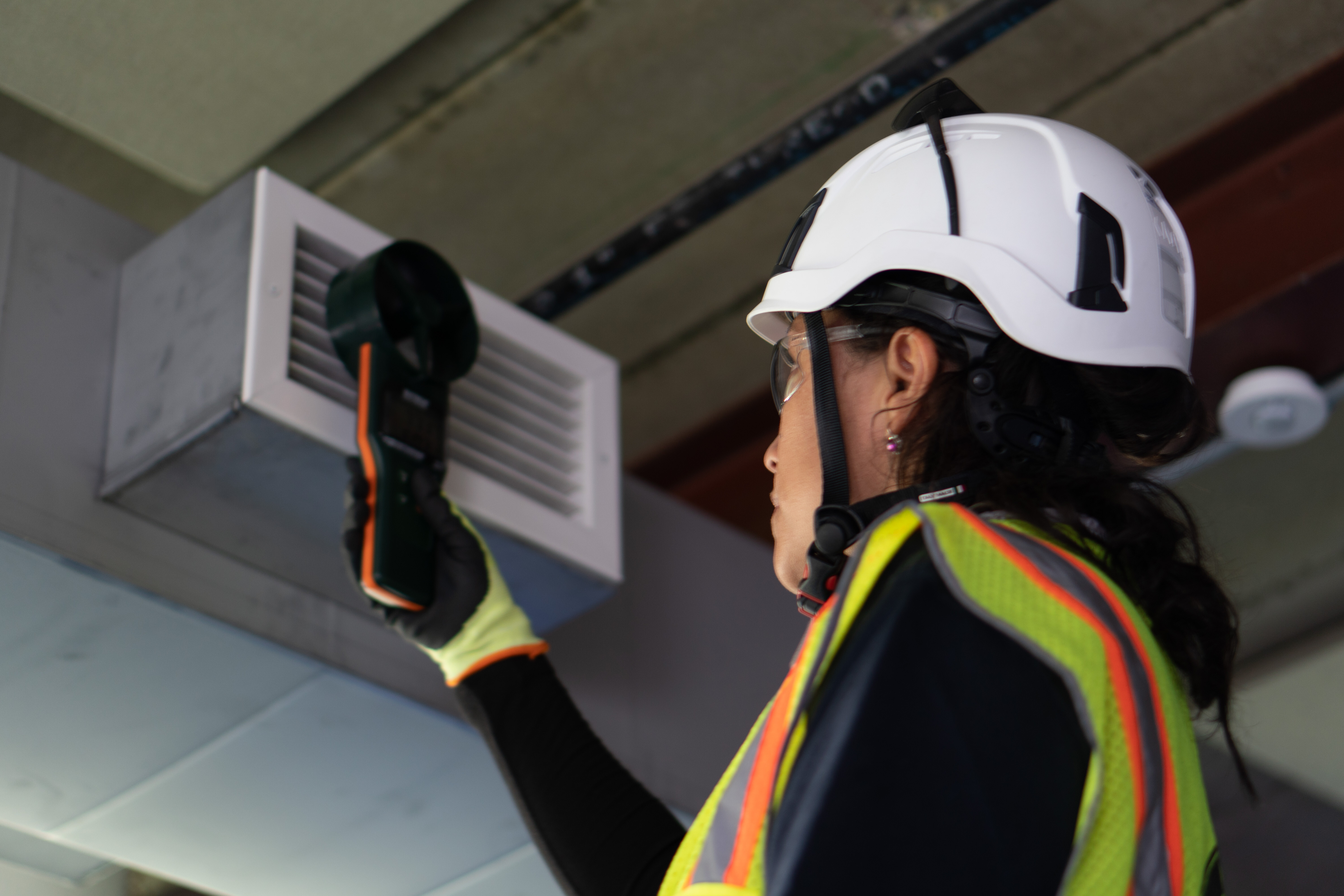
- Testing: Measuring airflow, water flow, temperature, and pressure
- Adjusting: Modifying system components like dampers, valves, and fan speeds
- Balancing: Distributing air and water evenly throughout the building
The goal is simple:
Make the installed system match the engineer's design intent.
TAB ensures HVAC systems operate efficiently, deliver proper airflow to every space, and maintain consistent comfort across the building.
What problems does testing and balancing solve?
TAB is typically performed when something isn't working the way it should, or to ensure it never gets to that point.
Common issues TAB identifies and corrects:
- Hot and cold spots throughout the building
- Poor airflow to certain rooms or zones
- High energy bills without a clear cause
- Systems running but not delivering comfort
- Pressurization problems in critical spaces
- Noise or vibration from HVAC equipment
- Imbalanced supply and return air
- Ventilation rates that do not meet code
These problems are extremely common. Even well-designed systems rarely perform perfectly after installation without TAB.
TAB aligns real-world performance with the original mechanical design.
Why does testing and balancing matter?
An HVAC system can be perfectly designed and still perform poorly.
Why? Because installation conditions, field changes, and operational variables introduce performance gaps.
Testing and balancing closes that gap.
Key takeaway: HVAC systems do not automatically perform as designed. TAB is the process that makes them perform as designed.
What are the benefits of testing and balancing?
1. Improved energy efficiency
When airflow and hydronic flow are aligned with design, systems use less energy to achieve the same result.
Balanced systems can reduce wasted energy by correcting over-delivery, under-delivery, and unnecessary runtime.
2. Better occupant comfort
TAB eliminates uneven temperatures by ensuring each space receives the correct amount of conditioned air.
Without balancing, some rooms run too hot and others too cold. With TAB, temperatures stabilize across zones.
Proper airflow distribution is essential for consistent comfort.
3. Longer equipment life
Systems that are out of balance force components to overwork. TAB reduces:
- Excessive fan strain
- Short cycling
- High static pressure
- Overloaded equipment
Balanced systems run smoother and last longer.
4. Improved indoor air quality
Proper airflow ensures adequate ventilation, better air mixing, and reduced stagnation. This is especially critical in healthcare and other controlled environments.
5. Code compliance and project closeout
TAB is often required for ASHRAE standards, energy codes, final commissioning, and occupancy approvals.
Without proper TAB reports, projects can fail inspections or experience delays.
How does testing and balancing work?
TAB is a structured, data-driven process carried out in five stages:
| Step | What Happens | Goal |
|---|---|---|
| 1. Review design and system conditions | Technicians review mechanical drawings, equipment schedules, design airflow (CFM), and control sequences | Establish the target performance |
| 2. Measure system performance | Calibrated instruments measure airflow at diffusers/grilles, static pressure, fan performance, water flow, temperature, and humidity | Identify gaps between actual and design performance |
| 3. Adjust system components | Technicians adjust dampers, valves, fan speeds, pump speeds, and control settings | Bring the system closer to design targets |
| 4. Balance the system | Even airflow distribution and proper air/water quantities are set across every zone | Achieve stable system operation within acceptable tolerances |
| 5. Verify and document | Final reports capture measured data, adjustments made, and variances from design | Confirm performance for commissioning and compliance |
These reports are critical for commissioning, compliance, and future reference.
What is the difference between testing and balancing and commissioning?
These terms are often confused. Here's the difference:
- TAB focuses on airflow, water flow, and system performance at a granular level
- Commissioning (Cx) is a broader process that verifies the entire building system
TAB is a key component of commissioning, not a replacement for it.
What systems are included in TAB?
TAB applies to both air-side and water-side systems.
Air-side systems
- Air handling units
- Rooftop units
- VAV systems
- Ductwork
- Diffusers and grilles
Hydronic systems
- Chilled water systems
- Hot water systems
- Pumps
- Coils
- Heat exchangers
TAB ensures both systems work together to deliver proper environmental conditions.
When should testing and balancing be performed?
TAB is not just a startup activity. It should be performed:
- After new construction
- After HVAC equipment replacement
- During commissioning or retro-commissioning
- When comfort complaints arise
- When energy use is higher than expected
- In critical environments requiring validation
TAB can also be performed periodically to verify ongoing performance.
Is testing and balancing worth it?
For most commercial buildings, yes.
TAB does not require major equipment replacement. It focuses on optimizing what already exists.
Typical results include:
- Reduced energy costs
- Improved occupant comfort
- Fewer maintenance issues
- Better system visibility
- Faster problem resolution
Without TAB, buildings often operate inefficiently for years without realizing it.
When is testing and balancing not necessary?
TAB may have limited value if:
- The building has very simple HVAC systems
- There are no comfort or performance issues
- Energy use is already optimized
- There is no ability to adjust system controls
However, most commercial buildings with ducted HVAC systems benefit from proper balancing.
What does a TAB setup include?
A standard TAB process includes:
- Certified TAB technician or agency
- Calibrated testing instruments
- Design documentation
- Measurement and data collection
- System adjustments
- Final report with verified performance
Certified firms often follow standards from organizations like NEBB and AABC to ensure accuracy and consistency.
What are common mistakes with TAB?
TAB fails when it is rushed or treated as paperwork. Common issues include:
- Skipping full system testing
- Incomplete measurements
- Poor documentation
- Lack of calibration
- Failure to verify final conditions
- Balancing before systems are fully operational
TAB is only valuable if it reflects actual, verified performance.
Real-world example: catching hidden airflow problems
In a mid-size office building, persistent hot and cold complaints led to a TAB investigation.
Findings:
- Several VAV boxes delivering 40 percent less airflow than design
- Static pressure set too high
- Supply air temperature not resetting
After TAB adjustments:
- Airflow aligned across all zones
- Static pressure reduced
- Comfort complaints dropped significantly
- HVAC runtime decreased
This is typical. Most buildings have correctable issues hiding in plain sight.
FAQ: Testing and Balancing (TAB)
What does TAB stand for?
TAB stands for Testing, Adjusting, and Balancing.
What is the purpose of TAB?
The purpose of TAB is to ensure HVAC systems operate according to design by verifying and correcting airflow and system performance.
Is TAB required for commercial buildings?
In many cases, yes. TAB is required for code compliance, commissioning, and project closeout depending on local standards and project specifications.
How long does TAB take?
TAB duration depends on building size and system complexity. It can range from a few days for smaller systems to several weeks for large, complex facilities.
What is the difference between air balancing and TAB?
Air balancing is one component of TAB. TAB includes testing, adjusting, and balancing both air and water systems.
How do I know if my building needs TAB?
Common signs include uneven temperatures, high energy bills, poor airflow, and constant comfort complaints. These are strong indicators the system is out of balance.
Does TAB improve energy efficiency?
Yes. TAB improves efficiency by aligning system performance with design, reducing wasted airflow and unnecessary runtime.
Who performs TAB?
TAB is performed by certified technicians or agencies, often following NEBB or AABC standards.