
150 N. Riverside, a 54-story office tower in Chicago's West Loop, saves $204,341 a year through Aero Performance Group's utility-funded monitoring-based commissioning (MBCx) program. Verified savings total 2,082,952 kWh and 374,966 ton-hours of district cooling annually, on a project cost of $2,550, a payback of less than one week.
Project at a Glance
| Detail | Result |
|---|---|
| Building | 150 N. Riverside Plaza, Chicago, IL |
| Building type | 54-story office tower with lobby retail, fitness center, and conference space |
| Size | 1,226,111 square feet |
| Completed | 2017 |
| HVAC | Four custom-built air handling units, supporting AHUs, district cooling, all-electric heating |
| Service | Utility-funded monitoring-based commissioning (MBCx) |
| Terminal units monitored | More than 1,700 fan-powered boxes |
| Verified annual electric savings | 2,082,952 kWh |
| Verified annual cooling savings | 374,966 ton-hours |
| Verified annual utility cost savings | $204,341 |
| Project cost | $2,550 |
| Payback | Less than 1 week |
| Status | Ongoing |
What Makes 150 N. Riverside Unique?
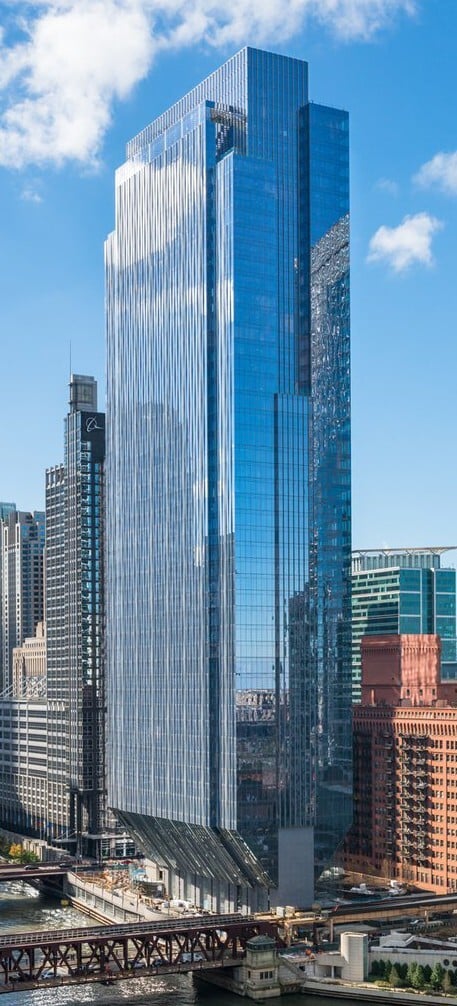
150 N. Riverside is one of the most distinctive office towers on the Chicago skyline. Completed in 2017 and designed by Goettsch Partners, the 54-story tower rises from a narrow base on a sliver of land along the Chicago River, with its plaza built on a deck spanning seven active Amtrak rail tracks.
The building's 1.2 million square feet are mostly office tenant space, with a large lobby that includes retail. Four custom-built air handling units provide ventilation, supported by smaller units serving the lobby, retail, fitness center, and conference spaces. The tower uses district cooling and is all-electric for winter heating, so every operational inefficiency shows up directly on the electric bill or the district cooling bill.
How Does Aero Support the Building?
Aero works with the facility and ownership team through a utility-funded MBCx program. Continuous analysis of trend data from the building automation system lets Aero identify savings opportunities, verify each measure after implementation, and confirm the savings persist.
The program also supports day-to-day operations and maintenance:
- Air handler analytics. Aero runs ongoing analytics on the building's air handling units to flag operational variances before they affect comfort or energy use.
- Rail exhaust fan analytics. The MBCx scope includes analytics on the Amtrak exhaust fans serving the building, which sits above active rail lines, equipment few office towers have to manage.
- Monthly terminal unit checkouts. Aero performs monthly checkouts on more than 1,700 fan-powered boxes, giving the engineering team a prioritized list of terminal units that need attention.
- Custom reporting. Aero built custom reports and analytics for the facility's specific operating needs.
What Were the Results?
| Metric | Verified Annual Result |
|---|---|
| Electricity savings | 2,082,952 kWh |
| District cooling savings | 374,966 ton-hours |
| Utility cost savings | $204,341 |
| Project cost | $2,550 |
| Payback | Less than 1 week |
On a $2,550 project cost, the building saves $204,341 every year, recovering its investment in under a week. Because the tower is all-electric for heating and buys its cooling from a district system, those savings reach the bottom line without any offsetting fuel cost.
What Can Other Office Tower Owners Take from This Project?
Three lessons apply to most modern high-rise office buildings:
- New buildings have savings to find. 150 N. Riverside opened in 2017, and MBCx verified more than $200,000 a year in savings.
- District cooling and all-electric heating raise the stakes. Every hour of excess fan, pump, or heating runtime is billed directly, so continuous monitoring pays back fast.
- Terminal unit programs scale. Monthly checkouts across more than 1,700 fan-powered boxes give the engineering team a manageable list, where manual inspection would take months.
Frequently Asked Questions
What is monitoring-based commissioning (MBCx) for office towers?
Monitoring-based commissioning (MBCx) is a continuous commissioning process in which engineers analyze trend data from an office tower's building automation system on an ongoing basis to find and correct HVAC inefficiencies. For high-rise office buildings, MBCx identifies savings as tenant schedules, seasons, and equipment conditions change, and it verifies each measure after implementation.
How much does 150 N. Riverside save with MBCx?
150 N. Riverside saves $204,341 a year in verified utility costs through MBCx, including 2,082,952 kWh of electricity and 374,966 ton-hours of district cooling. The project cost was $2,550, a payback of less than one week.
Can a newer building benefit from MBCx?
Yes. 150 N. Riverside was completed in 2017, and MBCx still verified $204,341 in annual savings. New buildings drift from their design intent as tenants move in, schedules change, and equipment ages, and continuous monitoring finds and corrects that drift.
Why do district cooling buildings benefit from MBCx?
A building on district cooling pays for every ton-hour of chilled water it uses, so reducing excess cooling load cuts costs directly. At 150 N. Riverside, MBCx verified 374,966 ton-hours of annual district cooling savings alongside 2,082,952 kWh of electricity savings.
What is a terminal unit checkout?
A terminal unit checkout is a review of each fan-powered box or VAV box to confirm it is controlling airflow and temperature correctly. At 150 N. Riverside, Aero performs monthly checkouts on more than 1,700 fan-powered boxes using MBCx analytics, giving the engineering team a prioritized list of units that need attention.
Where to Start
Modern office towers carry thousands of terminal units and complex air handling systems, and utility-funded programs can make continuous monitoring pay back in days. Aero Performance Group's monitoring-based commissioning services pair continuous data analysis with field verification to catch the VAV and fan-powered box faults a building automation system can miss.