Overview
Managing energy performance at a major sports and entertainment venue presents unique challenges. Occupancy fluctuates dramatically, operating schedules change daily, and mechanical systems must perform reliably whether the stadium is hosting a sold-out game or preparing for its next event.
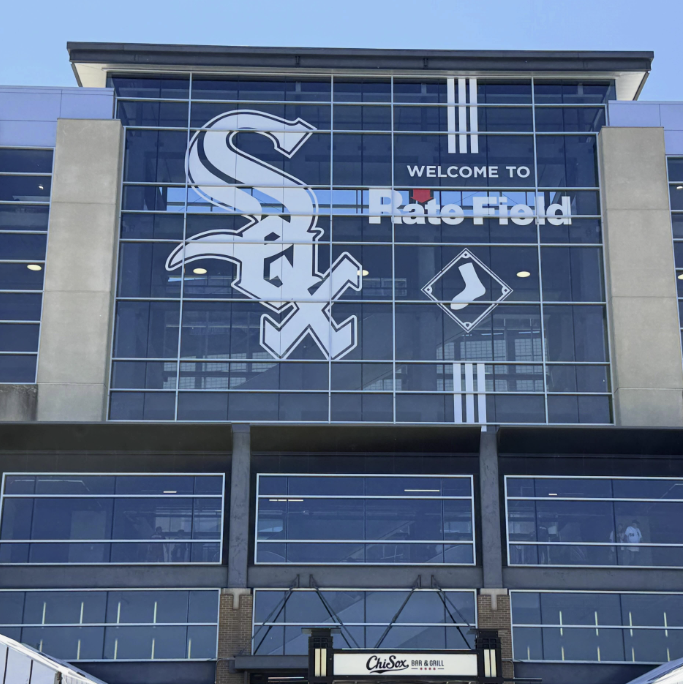
At Rate Field, facility leadership continually seeks opportunities to improve efficiency, reduce operating costs, and maximize the value of capital investments. When new high-efficiency chillers were installed, the expectation was that the upgraded equipment would deliver improved performance and energy savings.
However, after deploying Monitoring-Based Commissioning through the ComEd Energy Efficiency Program, it quickly became apparent that the plant was not operating as intended.
Rather than achieving optimal efficiency, the chillers experienced frequent compressor short cycling, preventing the facility from realizing the full benefit of its investment. What followed was a collaborative effort between Aero and the Rate Field facilities team.
The Challenge
New equipment does not automatically guarantee improved performance.
Shortly after the chiller replacement project was completed, facility staff observed that the chillers repeatedly started and stopped instead of operating at stable loads. Compressor short cycling was occurring throughout the chilled water plant, creating several concerns:
-
Reduced energy efficiency
-
Increased wear on compressor components
-
Additional maintenance risks
-
Reduced operational reliability
-
Potential reduction in equipment lifespan
The issue was particularly frustrating because the facility had already invested in modern, energy-efficient equipment. The challenge was not the chillers themselves, but how the overall plant was operating.
Rather than recommending additional capital expenditure, Aero partnered with the facilities team to investigate the root cause and identify operational improvements that could unlock the new equipment's intended performance.
The Investigation
Our team approached the project through a comprehensive analysis of the chilled water plant as a complete system rather than focusing solely on individual pieces of equipment.
Through data analysis, trend reviews, and field observations, we identified a key contributor to the short-cycling issue: inadequate flow under certain operating conditions
The investigation revealed that the plant's hydraulic performance and control strategy were not effectively supporting the new chillers. As cooling loads varied throughout the facility, the chillers struggled to maintain stable operation, leading to excessive compressor starts and stops.
To fully address the issue, both mechanical and controls improvements would be required.
The Solution
Working closely with the Rate Field engineering and operations teams, Aero developed a comprehensive optimization strategy to improve plant hydraulics and equipment sequencing.
Rebuilding the Swing Pump
A critical component of the solution involved rebuilding and recommissioning a swing pump that had fallen out of service.
Restoring the pump increased flow flexibility within the chilled water plant and helped ensure the chillers received the flow conditions necessary to operate as designed. This relatively simple improvement created a stronger hydraulic foundation for stable plant operation.
Developing a New Sequence of Operations
Mechanical improvements alone would not solve the problem. Aero designed and implemented a revised chilled water plant sequence of operations that optimized:
The new control strategy allowed equipment to operate more efficiently while minimizing unnecessary starts and stops. By aligning plant operations with actual cooling requirements, the facility was able to maintain stable performance across a wide range of operating conditions.
The Results
The project delivered significant operational and financial benefits.
More Than 600,000 kWh in Annual Energy Savings, saving over $50,000 per year in energy costs.
The optimized control strategy and improved hydraulic performance reduced annual electrical consumption by more than 600,000 kWh, generating substantial utility cost savings, saving the facility over $50,000 a year in energy costs.
Utility Rebates
Due to the facility’s participation in the ComEd Energy Efficiency program. The total cost of the solutions was covered by ComEd Rebates totaling around $24,000. This ensured the payback period on the improvements was immediate.
Elimination of Compressor Short Cycling
By improving plant flow and implementing a more intelligent sequencing strategy, the chronic short-cycling issue was effectively eliminated.
Extended Chiller Life
Reducing excessive compressor starts and stops helps lower mechanical stress on critical equipment. As a result, the facility not only improved efficiency but also protected its investment in newly installed chillers and improved long-term reliability.
Conclusion
The Rate Field project demonstrates how operational excellence can unlock the full value of capital investments.
By rebuilding a swing pump, redesigning the chilled water plant sequence of operations, and eliminating compressor short cycling, Aero helped transform an underperforming system into a high-performing asset.
The result was more than 600,000 kWh in annual energy savings, improved reliability, reduced equipment stress, and a stronger foundation for long-term facility performance.
For building owners and operators facing similar challenges, the lesson is simple: sometimes the greatest opportunities for savings are not found in replacing equipment, but in optimizing how systems work together.
Recognition
Rate field efforts have been recognized by Major League Baseball and beyond. See links for additional news articles:
https://www.mlb.com/press-release/press-release-mlb-celebrates-earth-day-2026-alongside-wm-announces-annual-sustainability-award-winners
https://www.mlb.com/mlb-together/green/club-initiatives#cws
....But Wait There’s More!
Not only was the chilled water plant optimized. Since the entire facility was being investigated with MBCx, even more savings were realized. Scheduling adjustments to better align with facility occupancy, pressure, and temperature resets, and setpoint adjustments were implemented to further reduce energy consumption and drive energy efficiency. The total project energy savings to date is 1,649,000 kWhs. This has led to $164,000 in energy cost reduction and almost $60,000 in ComEd Rebates.
You can read more about the project on ComEd’s website here: https://www.comed.com/ways-to-save/for-your-business/resource-center/case-studies/rate-field

_-_062.jpg?width=1920&height=1440&name=Chicago%2c_Illinois%2c_U.S._(2023)_-_062.jpg)